

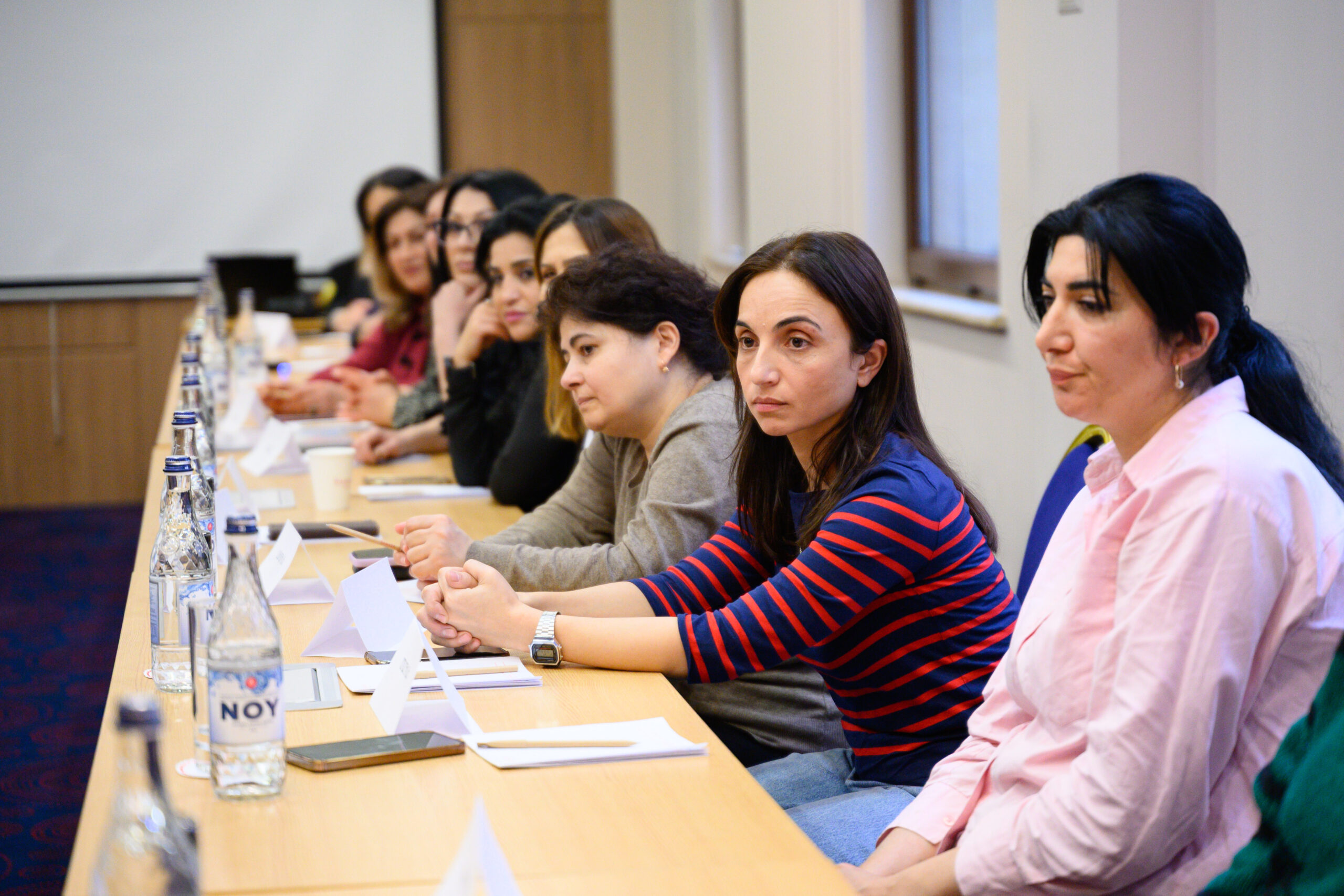
 Women who completed capacity-building courses within the “Women Empowerment for Demographic Resilience in Armenia” initiative, women preparing to return to work or take their first steps into the labor market, met with employers in Yerevan. This meeting became more than an information platform. It turned into a living bridge between lived experience, bought skills, and real opportunities waiting on the other side.
The meeting was organized in Yerevan on February 11–12 in cooperation with the “SME Cooperation Association.” What appeared was a space intentionally shaped to be safe and open: a space where dialogue mattered as much as job offers, and where understanding each other’s realities was as important as discussing potential partnerships.
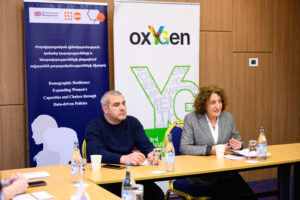 In her opening remarks, Margarita Hakobyan, Executive Director of the OxYGen Foundation, spoke about the deeper value of such platforms. Effective cooperation, she emphasized, begins with listening. Honest conversations make it possible to find the real needs of both job seekers and employers.
The women from the Yerevan group spoke about their professional skills alongside the lived realities that have shaped them: the responsibilities they carry, the transitions they have endured, and the quiet strength that rarely fits into a formal CV. Among them were single mothers, women caring for elderly family members, women forcibly displaced from Artsakh, and women on maternity leave. These were not stories framed as limitations.
They were shared as evidence of strength, of responsibility carried quietly, of resilience shaped by circumstance, of the ability to navigate complexity. Throughout the capacity-building courses, trainers had consistently underlined this: experience is not something to hide. It is something to understand, articulate, and claim.


During the meeting, the women applied what they had learned in psychological support sessions, human resource management, and career planning courses. Simulation interviews have helped them confront internal barriers – hesitation, self-doubt, and fear of rejection. As a result, in face-to-face conversations with real employers, they presented themselves clearly, structurally, and with confidence, articulating not only what they could do, but where they wished to grow.
Hakob Avagyan, co-founder and chairman of the board of the “SME Cooperation Association,” introduced the participating employers and worked actively to set up direct connections between potential employees and companies. His involvement helped ensure that conversations moved beyond formalities toward practical, tangible outcomes.
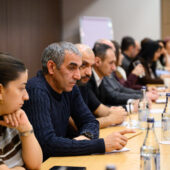

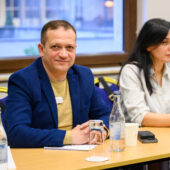
Employers shared their own journeys: many of them beginning from scratch, without guarantees. Their advice was direct and grounded: be proactive, show interest, do not wait passively for offers. One employer noted that experience alone is rarely decisive. Often, it is motivation, willingness to learn, and an intense sense of responsibility that makes the difference.
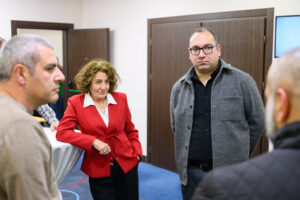 Because representatives of educational institutions were also present, the discussion extended beyond immediate employment. The women asked about retraining opportunities and pathways to new professions. Preliminary agreements were reached for participation in further educational programs, expanding the horizon beyond a single job toward long-term professional development.
After the structured presentations and discussions, the meeting continued in a more informal format. Direct conversations allowed both sides to speak openly, to clarify expectations and limitations, and to build trust not only as professionals, but as people.

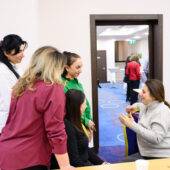
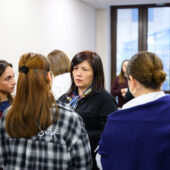
At the end of the meeting, participants reflected that without this initiative, they would hardly have met such a diversity of job options or had the opportunity to engage face-to-face with specialists from different fields. For many, the experience was not solely about employment. It was about reclaiming confidence, about seeing themselves not as applicants asking for a chance, but as professionals ready to contribute.
 Employers, in turn, proposed creating an online platform to sustain communication and regularly share information about new opportunities.
The meetings will be followed by several-week internships tailored to the individual needs and professional orientation of the participating women. This stage is designed to support sustainable and long-term inclusion in the labor market.
At its core, demographic resilience is not a distant policy concept but a lived reality. It takes shape in people’s everyday choices, in their access to decent work, and in their ability to build stable, dignified futures for themselves and their families.
The initiative is implemented by the OxYGen Foundation within the framework of the “Demographic Resilience: Expanding Women’s Capacities and Choices through Data-driven Policies” project. The project is implemented by UNFPA and funded by UK International Development from the UK government.
